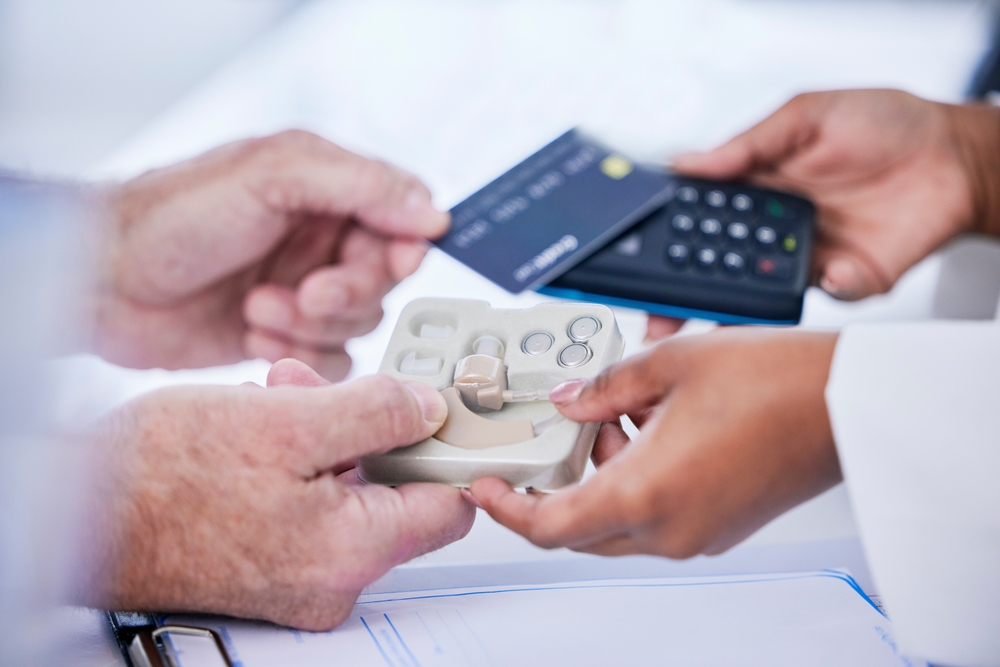
When exploring treatment options for age-related hearing loss or presbycusis, the initial clinical cost of amplification devices can be striking. The total investment fluctuates significantly based on the specific acoustic gain features and the level of personalized audiology care included. For many people, that comes as a surprise, and it can understandably feel like a stopping point.
Although the retail price is substantial, alternative funding mechanisms change the clinical landscape. A high percentage of candidates remain unaware that retail pricing is seldom the final out-of-pocket obligation. By leveraging private insurance benefits, tax-advantaged health funds, and structural payment programs, the net cost can be minimized.
This clinical brief outlines primary procurement strategies to educate you prior to your diagnostic evaluation, ensuring a confident approach to auditory rehabilitation.
Evaluating Third-Party Payer Coverage for Auditory Rehabilitation
Initial financial due diligence should always begin with an evaluation of your current insurance portfolio.
Under private healthcare frameworks, the scope of coverage for speech-preservation technology is subject to extreme variation. Selected guidelines cover a predefined percentage of the hardware, while others issue a flat-rate allowance. Regrettably, specific commercial contracts provide no financial remedy for hearing preservation. To clarify your position, review your summary of benefits or contact the carrier regarding otolaryngological provisions. Inquire specifically about monetary caps, whether real-ear measurements and fittings are covered, and your preferred provider network status.
If you’re on Medicare, it’s important to know that Original Medicare (Parts A and B) does not cover hearing aids. Fortunately, choice Medicare Part C programs fill this gap by providing an annual allowance or discounted device network.
For low-income individuals on Medicaid, regional state guidelines dictate the scope of available hearing care. Multiple state plans include provisions for adult hearing care, so consulting your local administrative specialist is highly recommended.
Tax-Advantaged Financing: Utilizing HSA and FSA Funds for Hearing Care
An existing Health Savings Account (HSA) or Flexible Spending Account (FSA) represents an exceptional mechanical advantage for offsetting medical costs.
These clinical instruments meet the legal definitions for qualified medical expenses, authorizing the use of untaxed income. That alone can make a big difference. For example, if you’re in a 22% tax bracket, a $2,000 purchase effectively costs closer to $1,560. HSAs roll over year to year, while FSAs usually expire at the end of the year. Therefore, coordinating your audiology care with your annual FSA deadline ensures no assets are wasted! Both prescription and many over-the-counter hearing aids qualify, so it’s worth checking your balance before your appointment.
Amortization and Medical Financing Strategies for Advanced Hearing Systems
Many hearing care practices offer hearing aid financing options that allow you to spread payments over time instead of paying everything up front. Managed through medical financing leaders like CareCredit, these structures frequently supply zero-interest terms to qualified applicants. This arrangement protects the patient from selecting sub-optimal technology merely to meet an immediate budget limit.
Integrating payment plans into your treatment discussion is a routine and professional practice. If you’re concerned about cost, mention it during your doctor’s visit. Recognize that these corporate and clinical credit options are deliberately positioned to bridge the affordability gap! The medical community firmly believes that securing vital sensory rehabilitation should never require severe financial disruption.
Comprehensive Hearing Aid Support and Access for Eligible Military Veterans
Hearing loss is one of the most common service-related conditions among veterans, and it’s important to know that the Veterans Administration (VA) offers meaningful support.
Veterans meeting specific enrollment criteria can procure advanced prescription amplification devices entirely through VA medical benefits. Even if your documentation lacks an explicit acoustic connection, your broader VA medical tier might authorize these devices. If you haven’t explored your VA benefits yet, it’s worth reaching out to your local VA facility or asking your provider for help navigating the process.
Civic and Non-Governmental Resources for Affording Hearing Technology
Independent philanthropic organizations and civic associations offer specialized avenues to mitigate the expense of hearing devices. Distinguished institutions, including the Starkey Hearing Foundation alongside local Lions Clubs, manage device donation programs. Additionally, select state health departments manage specialized equipment distribution programs for qualifying low-income residents.
These programs can have eligibility requirements and waiting lists, but they’re worth exploring, especially if your insurance coverage is limited. You can check online with most of these organizations to see if you qualify, or at least get the conversation started.
OTC Hearing Hardware: A Technical Assessment of Lower-Cost Auditory Options
The OTC retail segment offers a highly economical alternative, with average pair pricing falling between several hundred and one thousand dollars. They can be helpful for adults with mild to moderate hearing loss.
However, omitting an individualized audiometric diagnostic fitting frequently leads to suboptimal user satisfaction and poor device retention. For individuals demonstrating pronounced or complex sensory deficits, physician-fitted clinical devices consistently yield superior acoustic gain stability.
Rather than purchasing an OTC model out of economic necessity, investing in a professional evaluation establishes your true baseline needs. An OTC unit provides a reasonable short-term stopgap for patients navigating the administrative timelines of specialized procurement. They deliver a satisfactory temporary compromise, but remain structurally inferior to custom clinical systems over an extended timeline.
A Collaborative Approach to Affordable Hearing Care and Device Selection
We help our patients navigate hearing aid costs every day. Most individuals are pleasantly surprised by the diversity of available payment pathways once analyzed.
Provide your health insurance credentials at your intake visit, allowing us to audit your benefits and maximize your available financial credits. Phone our office location today to secure a consultation slot or coordinate your evaluation via our website. We look forward to delivering the accurate answers and balanced payment options necessary to restore your connection to the world.
