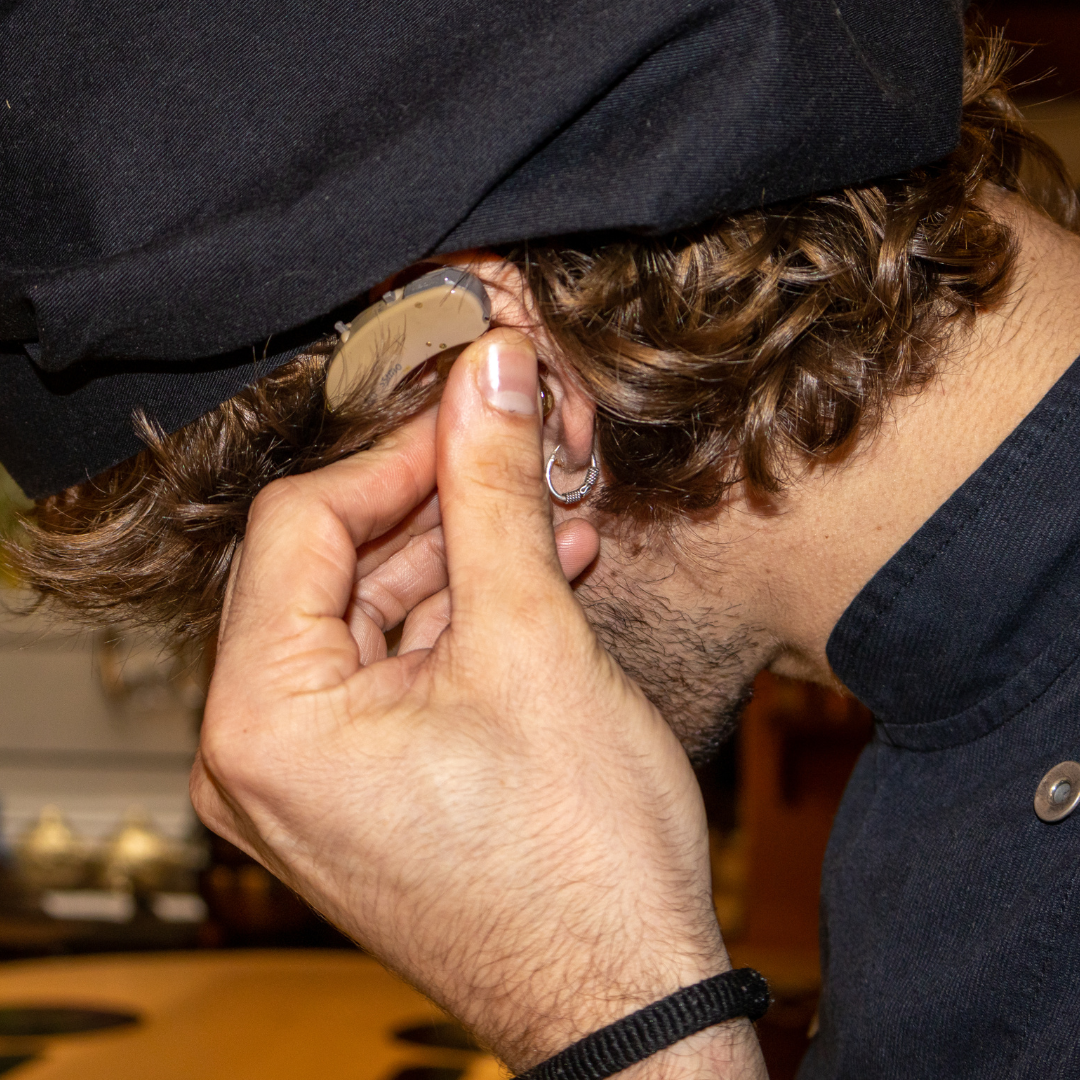
Group discussions in restaurants often become difficult to comprehend when room acoustics compete with your focus and hearing. Our clinical team can evaluate hearing across quiet settings and background-noise environments to pinpoint specific auditory challenges. Once the diagnostic etiology of your difficult hearing is established, we implement personalized clinical and technological strategies.
Understanding the Contrast Between Quiet Hearing and Restaurant Noise
Low-noise environments yield an advantageous signal-to-noise ratio where primary speech remains significantly louder than background sound. Dining venues establish an entirely contrary auditory challenge. Background voices, loud music, service clatter, and wall reflections collide with spoken words, demanding heightened cognitive processing to isolate individual speech.
This problem can occur with high-frequency hearing loss, auditory-processing difficulty, or age- and noise-related changes. Attention, fatigue, dim lighting, and distance from the speaker may make it worse. Some people have normal results on a basic hearing test but still perform poorly on speech-in-noise testing. Experiencing speech-recognition struggles in noisy dining venues warrants a formal audiological evaluation regardless of seemingly normal quiet hearing.
How Is High-Frequency Hearing Loss Diagnosed?
We initiate evaluation by exploring challenging acoustic environments, acoustic trauma history, subjective tinnitus, prescription drug profiles, and unilateral ear changes.
Diagnostic pure-tone audiometry establishes the softest auditory thresholds you can perceive across standardized frequencies via air and bone conduction pathways. High-frequency hearing loss commonly presents on the audiogram as a characteristic precipitous drop in the higher frequency ranges. Extended test batteries incorporate acoustic tympanometry to rule out middle-ear pathology along with suprathreshold word-recognition testing.
Given that isolated quiet booths do not reflect chaotic restaurant acoustics, specialized speech-in-noise testing delivers invaluable diagnostic data. It evaluates sentence-level speech comprehension as competing background babble increases in volume. Combined, these clinical findings determine whether your symptoms stem from acoustic audibility, word clarity, central noise filtering, or multifactorial causes.
The Role of Central Auditory Processing Disorders in Adults
A diagnosed auditory processing disorder affects how the brain’s auditory cortex analyzes, organizes, and interprets sound. The physical ear mechanisms may capture tones correctly, but the central brain pathways struggle to filter competing inputs, parse similar consonants, or interpret rapid speech. We prioritize assessing peripheral auditory acuity before recommending an in-depth central auditory-processing assessment or external medical referrals.
Actionable Listening Tips for Noisy Social Settings
Simple situational adjustments enhance the speech signal entering your ears and offer clearer facial cues. Prioritize dining at establishments designed with subdued acoustics or reserve tables during non-peak business hours. Facilities equipped with upholstered booths, acoustic baffles, fabric curtains, carpeted floors, and soft materials prove far easier on hearing than minimalist, hard-tiled spaces.
At the restaurant:
- Request a table away from the kitchen, bar, speakers, and large groups.
- Sit with a perimeter wall directly behind you to cut down on ambient noise approaching from the rear.
- Face your speaking partners directly in well-illuminated seating to maximize visual speech cues.
- Reduce physical spacing between yourself and companions to maximize direct speech perception.
- Direct your better-performing ear toward the companion you most need to understand.
- Ask speakers to reword the specific phrase you missed rather than repeating their initial wording.
- Confirm important details rather than pretending to understand.
- Take brief listening rests outside or in quiet hallways when mental fatigue emerges.
- Invite companions to focus on clear articulation and a measured, comfortable cadence.
- Shouting creates acoustic distortion that actively compromises speech understanding rather than helping.
Modern Audiological Tools for Managing Background Noise
Choosing the most effective auditory device requires evaluating diagnostic findings, acoustic lifestyle factors, and the presence of hearing loss. Prescription hearing aids fitted by an audiologist leverage directional microphone arrays, advanced digital noise reduction, and dedicated restaurant programs to focus on frontal speech while dampening background sound. Realistic expectations are vital, since even advanced hearing devices cannot completely erase background conversational chatter.
Remote wireless microphones offer an exceptional boost to the signal-to-noise ratio in challenging venues. The accessory is worn on the lapel or set near the speaker, streaming their voice directly into compatible hearing aids or wireless audio receivers. This reduces the effects of distance and surrounding noise.
Additional effective assistive technologies include:
- Omnidirectional table microphones designed for group dining tables
- Telecoils or hearing-loop systems in equipped venues
- Mobile speech-to-text applications delivering instant visual captions during dinner
- Smart earbuds offering dedicated speech-in-noise amplification settings
- Sound-meter apps and acoustic dining directories for locating quiet venues
We evaluate these technological options, ensure full hardware compatibility, and instruct you on maximizing your selected system.
How Medical and Audiology Specialists Resolve Hearing in Noise
Clinical hearing evaluations progress the diagnostic process past the typical assertion that hearing is adequate in quiet. We assess the specific acoustic settings, speaker dynamics, and volume levels that disrupt your hearing to administer targeted evaluations. Your diagnostic appointment may incorporate pure-tone air and bone thresholds, acoustic middle-ear testing, word-recognition scores, and speech-in-noise measures. Dedicated central auditory-processing testing will be scheduled if your history and primary diagnostic testing indicate central pathway issues.
Any sudden, asymmetric, or rapidly deteriorating hearing loss demands immediate medical evaluation by an ear, nose, and throat physician. Tailored audiological treatment identifies the exact origin of listening breakdown rather than assuming environmental dining noise is the sole culprit.
Book Your Comprehensive Hearing Evaluation Now
If dining in loud spaces leaves you feeling isolated, fatigued, or guessing at missed speech, contact us to schedule a thorough hearing evaluation. Our clinical team will determine the best strategies to improve your hearing in noisy environments through custom hearing-aid programming, remote microphones, or targeted auditory rehabilitation.
Reach out to our audiology clinic today to schedule an evaluation and begin enjoying clear, effortless conversations.
