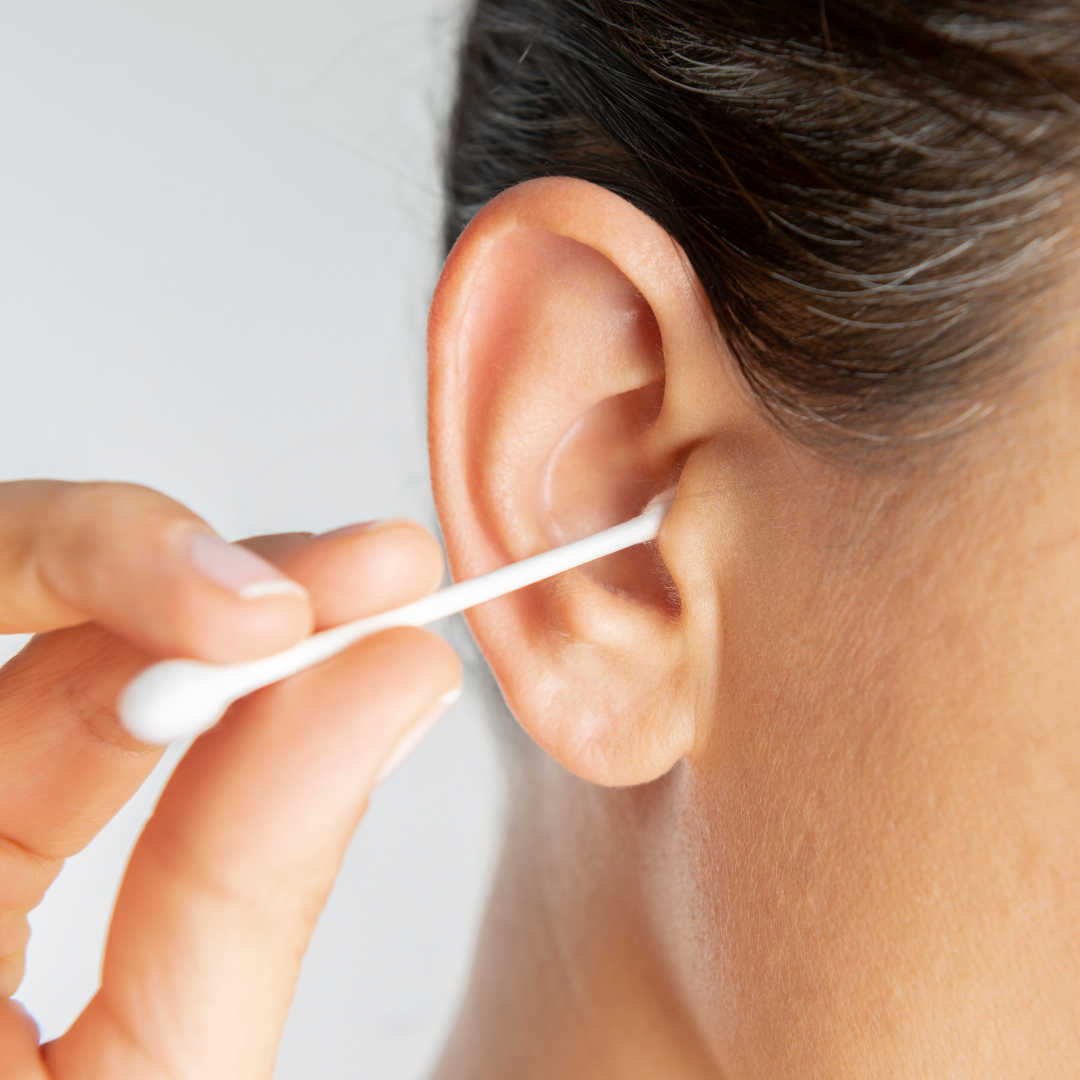
Although cotton swabs appear to offer an easy hygiene solution, pushing them into the ear canal often worsens wax accumulation and risks tissue trauma. We assess whether your earwax demands professional intervention and provide customized care strategies that match your clinical profile. The auditory canal generally manages its own cleaning; however, should impaction arise, our team provides safe clinical earwax removal.
Understanding the Risks of Using Q-Tips in the Ear
Clinically speaking, earwax, or cerumen, should never be regarded as dirt or debris. It traps dust and debris, helps limit bacterial growth, lubricates the ear canal, and protects its sensitive skin. Normal jaw articulation and progressive skin turnover transport old cerumen toward the external ear opening, where it naturally detaches.
Using a cotton swab within the ear canal halts this physiological self-cleaning function. Even if the swab gathers a trace of surface cerumen, it routinely compacts the remaining mass against the eardrum. Continuous swab usage packs loose secretions into a hardened mass, generating an occluded sensation that tempts patients into additional probing.
Although swabs can sanitize the outer folds of the auricle, they should never penetrate the delicate ear canal.
How Can Ears Get Damaged from Q-Tip Use?
The sensitive skin protecting the ear canal exhibits extreme thinness and scratches effortlessly. Minor physical scratches induce pain, trigger localized bleeding, and invite bacterial colonization, increasing outer ear infection rates. Furthermore, the cotton fibers may separate from the stick, leaving a foreign body lodged within the canal.
Documented injuries associated with cotton swabs include:
- Earwax compressed tightly against canal walls
- Epithelial lacerations, inflammation, erythema, or bleeding
- Secondary bacterial otitis externa
- Retained cotton tip or foreign object obstruction
- Structural tears or perforations across the eardrum
- Trauma inflicted on the ossicular chain behind the eardrum
- Temporary or permanent hearing changes
- Onset of tinnitus, positional dizziness, or acute ear pain
Although catastrophic damage remains relatively rare, unexpected arm bumps, hand slips, or excessive insertion depth easily cause acute harm.
How Frequently Should You Remove Earwax?
Most healthy adults have no clinical need to extract earwax on a set timetable. Normal ears migrate cerumen toward the opening constantly, allowing routine bathing to cleanse the visible exterior. Scrubbing too frequently dehydrates the auditory passage, causes persistent irritation, and raises risks for secondary infections or blockages.
Cerumen removal is indicated when buildup obstructs the canal, hinders tympanic membrane visualization, degrades hearing aid performance, or generates symptoms.
What Are Safe Ways to Remove Earwax At Home?
When cerumen creates no clinical symptoms, leaving the canal alone remains the most prudent approach. Wipe only the outer ear with a soft, damp cloth, and let the canal clean itself.
When dense wax needs to be softened, we may suggest specialized OTC drops or solutions containing carbamide peroxide, saline, glycerin, or mineral oil. Dispense only the directed amount and restrict use strictly to the timeframe specified on the product packaging. Immediately halt applications if the medication triggers pain, profound dizziness, skin irritation, or deteriorating symptoms.
Performing irrigation at home is unsafe for certain individuals and must only proceed after a clinician verifies ear safety and explains the protocol. Never attempt to flush your ear canal with a pressurized dental water irrigator. Avoid hazardous gadgets including ear candles, sharp metal loops, camera-assisted tools, hair clips, and home vacuum extractors. Such unapproved devices easily burn canal walls, cut fragile skin, puncture the eardrum, or drive cerumen deeper.
When Is Professional Earwax Extraction Necessary?
Set up an audiological evaluation whenever your ear stays plugged after softening care, wax is firmly impacted, or home efforts fail repeatedly. Professional removal is also preferable when a person cannot safely hold still, has a narrow ear canal, uses hearing aids, or has medical or surgical factors that make drops or irrigation risky.
Obtain a focused audiological evaluation for:
- Ear pain, persistent itching, or tenderness
- Blood, pus, clear fluid, or unpleasant-smelling drainage
- Systemic fever spikes or acute swelling near the external ear
- The sudden appearance of tinnitus or true dizziness
- Hearing loss that develops suddenly or continues after wax removal
- A possible eardrum perforation or cotton fragment trapped inside
- Recurrent impaction that affects hearing devices
A sudden reduction in one ear’s hearing demands emergency evaluation rather than an assumption of wax blockage. Fast diagnostic testing reliably differentiates a conductive wax plug from an acute, time-sensitive sensorineural emergency.
In-Office Procedures for Clearing Earwax Blockages
The clinical process starts with high-magnification otoscopy or microscopy to establish cerumen presence and screen for infections, abrasions, or tympanic perforations. The most appropriate removal approach is determined by wax texture, canal structure, patient background, surgical history, and individual tolerance.
Standard clinical removal options include:
- Therapeutic cerumenolytic solutions instilled before or during treatment
- Regulated mechanical irrigation with body-temperature saline for sealed eardrums
- Low-pressure manual suction under direct high-magnification lighting
- Manual instrument clearance utilizing dedicated ear loops, fine curettes, or small forceps
Direct visual control ensures the provider maneuvers safely around thin canal skin and stops if any tenderness develops. Resolving highly compacted or dry earwax often involves integrating multiple clinical removal techniques. Following cerumen extraction, a complete post-procedure examination verifies that the canal epithelium and tympanic membrane are intact. If fullness, tinnitus, dizziness, or hearing difficulty continues, additional testing can identify another cause.
Contact Us for Safe Professional Earwax Removal
Should your ears feel congested or your hearing performance decline, arrange an evaluation with our audiology clinic instead of reaching for swabs. The diagnostic session entails reviewing your symptom timeline, past otologic procedures, hearing aid usage, past home treatments, and risk factors for recurring cerumen. Reach out to our audiology clinic today to schedule your professional earwax-removal visit.
